How to improve your typing speed
Typing speed is measured in words per minute (WPM). Raising it is less about typing harder and more about typing smarter. Here is what actually moves the number.
First, understand WPM
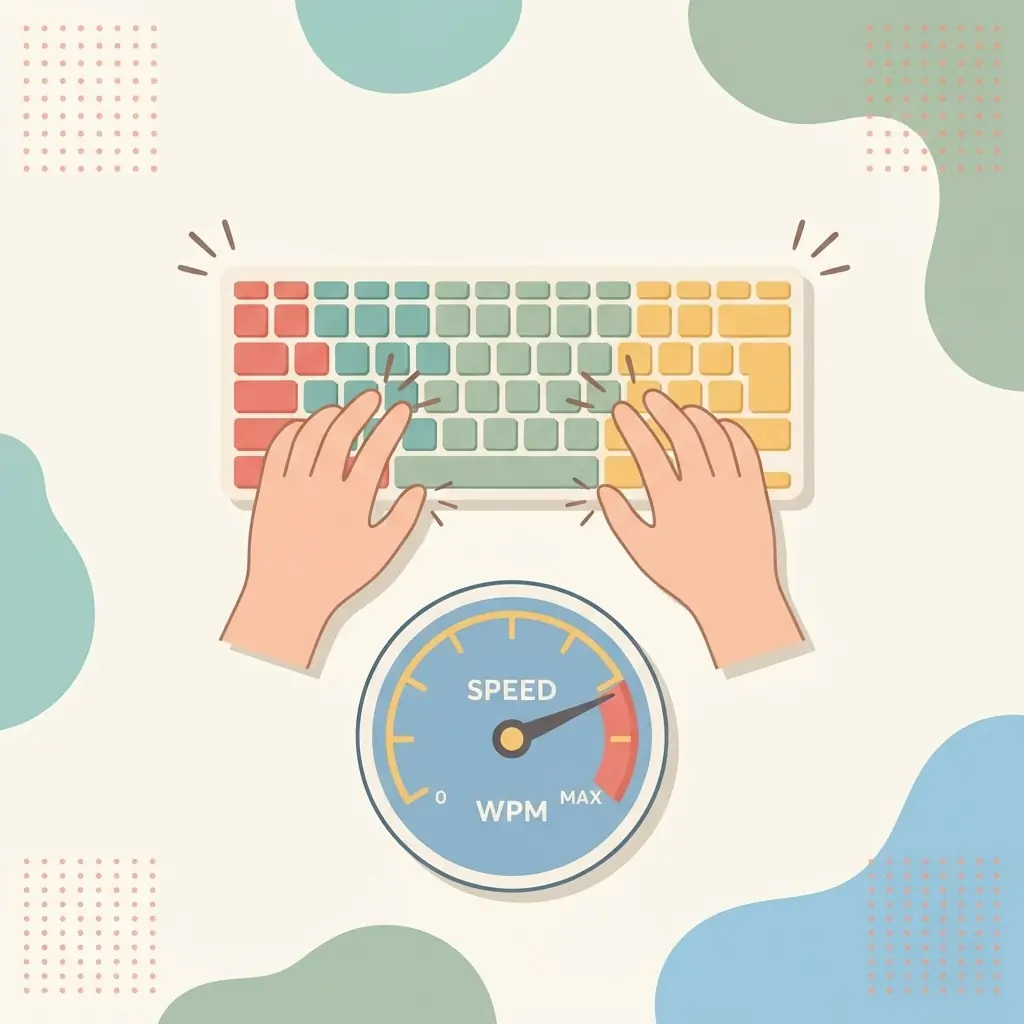
WPM counts how many standard five-character “words” you type in a minute. A score around 40 WPM is a comfortable everyday pace; 60–70 WPM is fast; and professional typists often go higher. You can check your current number any time with a timed typing test.
Touch typing is the single biggest gain
The largest speed jump comes from touch typing — using all your fingers without looking at the keyboard. Hunt-and-peck typing has a low ceiling because your eyes keep leaving the screen. If you only do one thing, learn to keep your fingers on the home row and your eyes up.
A practice routine that works
- Warm up on the home row. Two minutes of familiar keys settles your hands.
- Drill your weak keys. Everyone has letters they fumble — practise those on purpose.
- Type real words and sentences. Speed on real text matters more than speed on random letters.
- Finish with a short test. One timed run gives you a number to beat next time.
Fifteen focused minutes a day beats a two-hour session once a week. Consistency builds the muscle memory that speed depends on.
Build rhythm, not force
Fast typists move in a calm, even rhythm rather than sprinting and stalling. Aim for a steady pace you can sustain across a whole sentence. Speed then rises on its own as the movements become automatic.
Do not chase speed at the cost of accuracy
Every mistake costs you a backspace and a correction — usually slower than just typing carefully the first time. Push your pace only as fast as you can stay accurate. If your errors climb, slow down. See the accuracy guide for drills.
Make it a habit with games
If a daily drill feels like a chore, use typing games instead. They demand the same touch-typing skill but keep you coming back, which is what really grows your speed over weeks.
How ShreePrati calculates your WPM
Your speed is worked out from correctly typed characters only, divided by five and then by the minutes elapsed. The timer starts on your first keystroke, so there is no penalty for getting ready. Because wrong characters do not count towards WPM, an accurate run will always beat a rushed run full of errors at the same raw pace.
Realistic speed milestones
- Under 25 WPM: still learning key positions. Focus on lessons, not tests.
- 25–40 WPM: touch typing is forming. Practise real words and sentences daily.
- 40–60 WPM: a solid everyday pace. Work on rhythm and your weakest keys.
- 60 WPM and above: fast. Gains now come from accuracy, punctuation and capitals.
Many learners gain several WPM in the first few weeks, then progress more slowly. A plateau is normal and usually means it is time to refine technique rather than practise harder.
Breaking through a plateau
- Slow down for a few days. Typing at 80% of your top speed with near-perfect accuracy cleans up hidden bad habits.
- Read ahead. Let your eyes stay a word or two ahead of your fingers so you never pause to see what comes next.
- Use longer tests. A 5-minute or 10-minute test shows whether your speed holds up, which a 1-minute burst can hide.
- Check your posture. Sit upright, keep wrists relaxed and level, and keep the screen at eye height so your hands stay loose.
Track progress the right way
Compare results from the same test length, ideally at the same time of day. Your best WPM and accuracy are saved in your browser, so you can see whether today's run beats your previous record without creating an account.