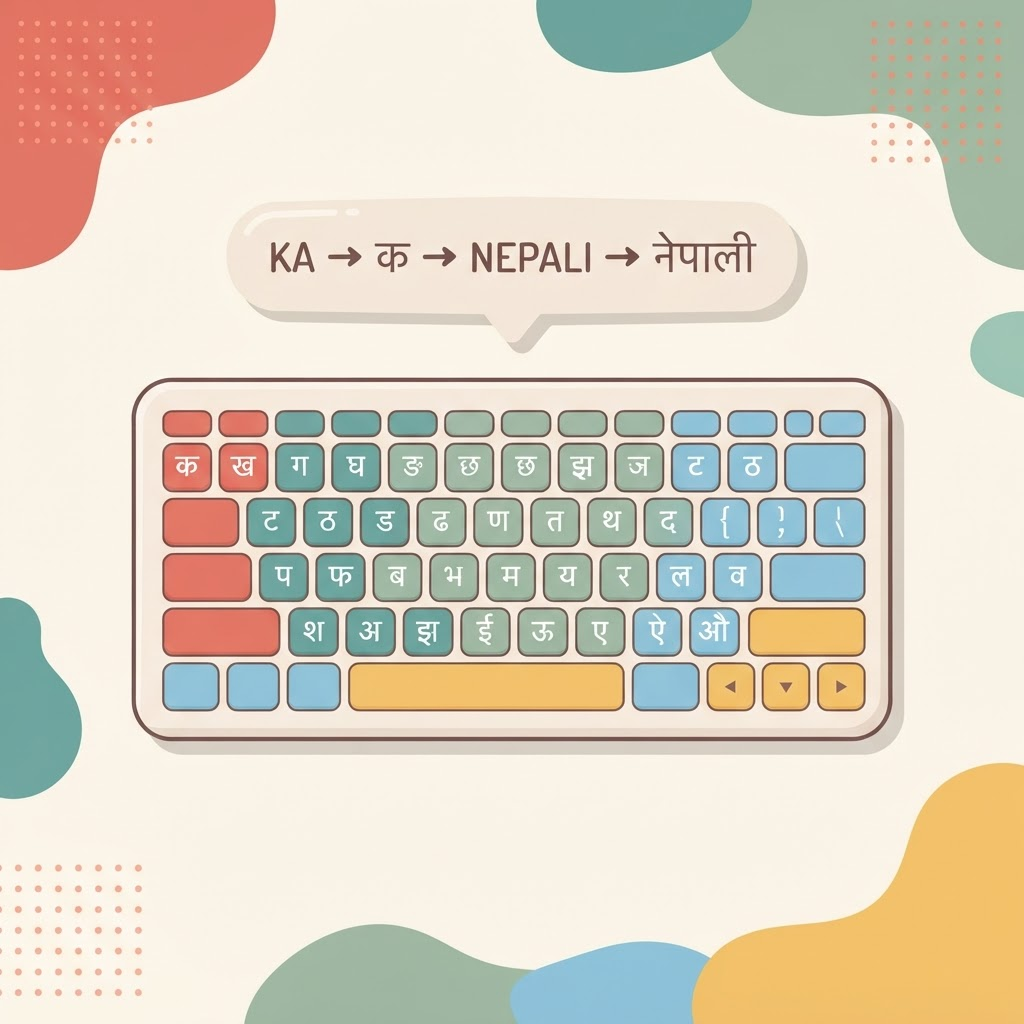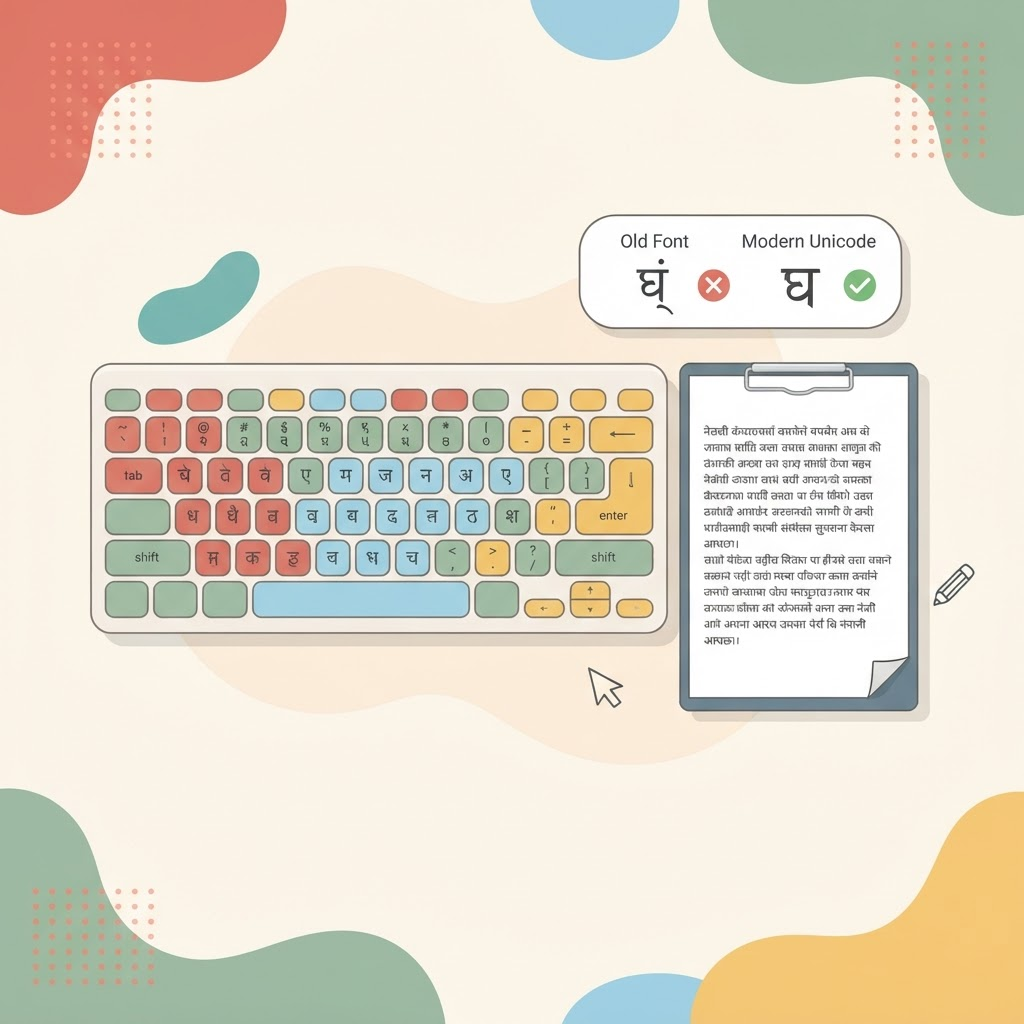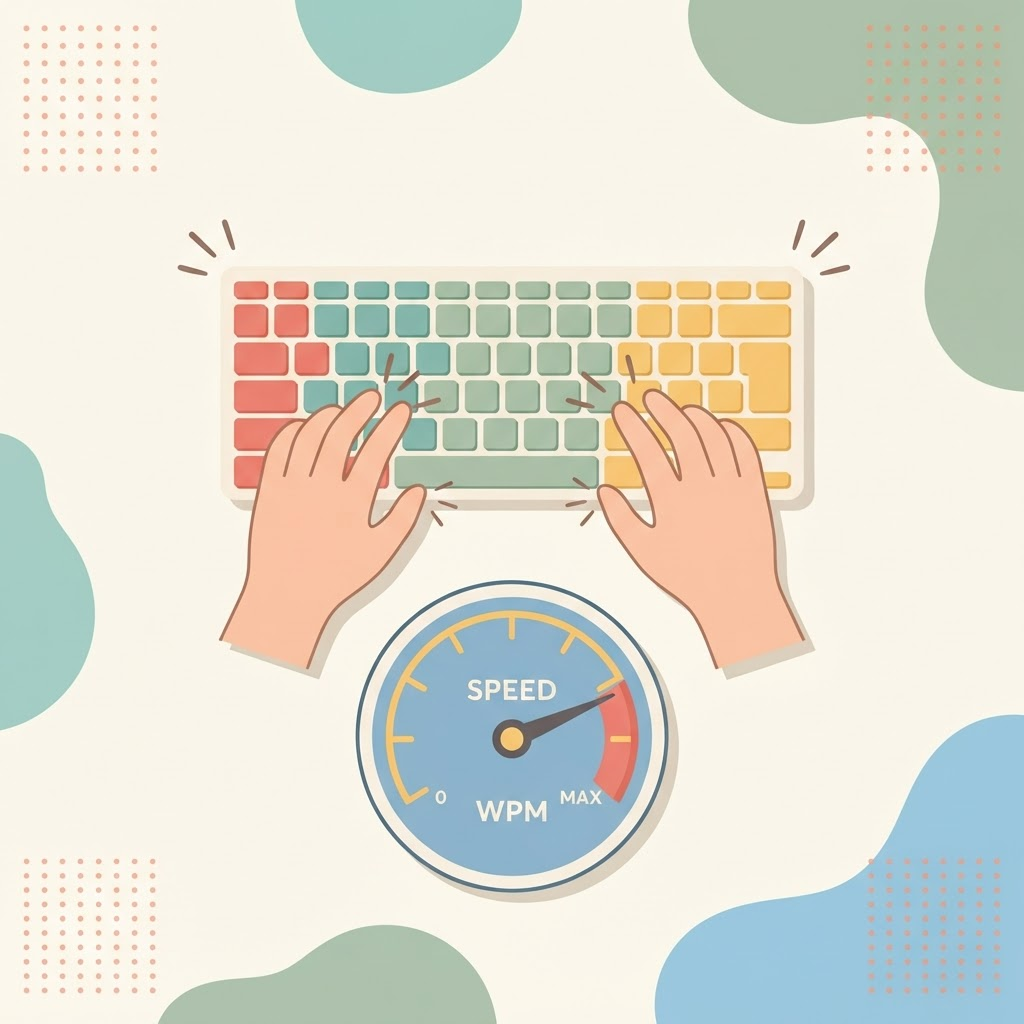
Nepali typing test
A Nepali typing test turns your practice into two clear numbers — speed and accuracy — so you can see whether you are actually improving. This guide explains how Nepali typing speed is measured, what a good score looks like, and how to use your results to practise smarter.
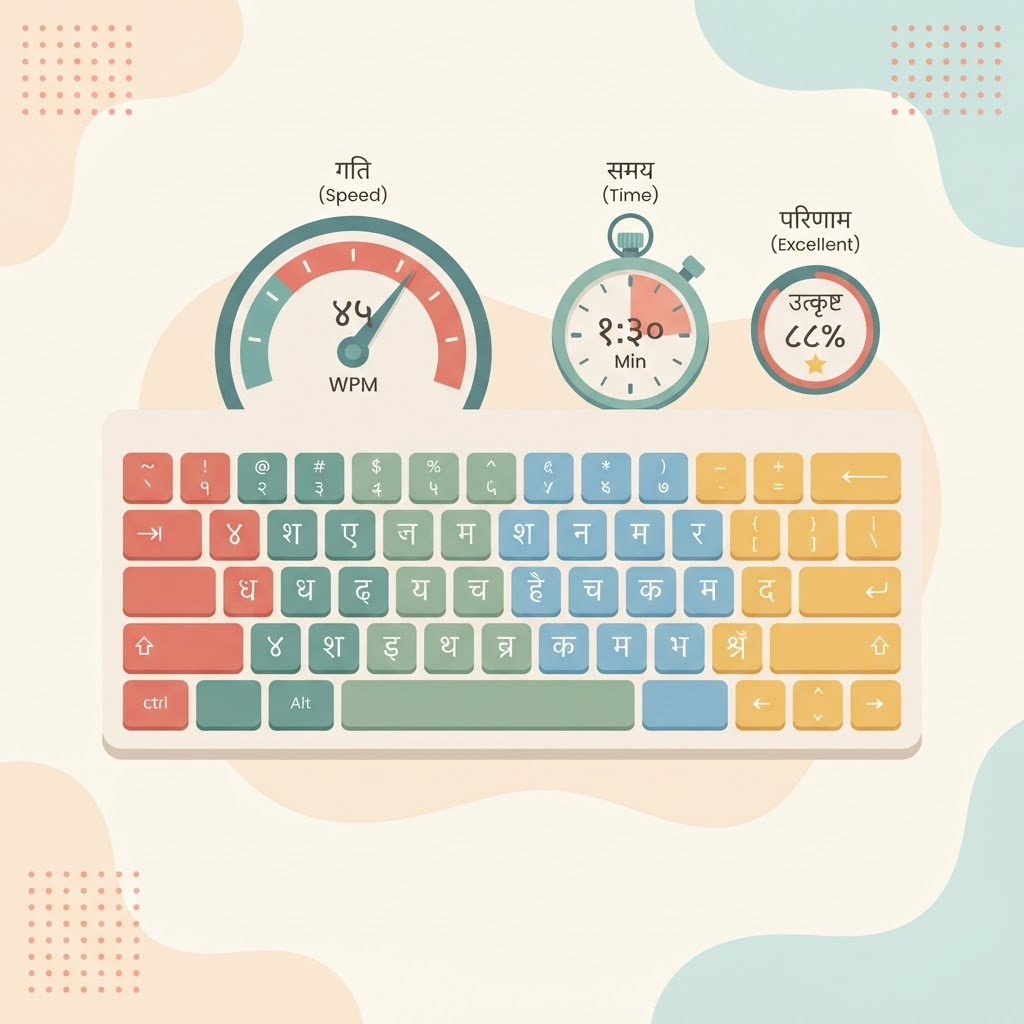
A Nepali typing test measures how fast and how accurately you type a passage of Devanagari text. It is the best way to confirm your practice is working, because it gives you an objective score to beat next time. Take one free on the Nepali typing test page, then use this guide to make sense of the result.
How Nepali typing speed is measured
Like English, Nepali typing speed is usually reported in words per minute (WPM), and accuracy as the percentage of characters typed correctly. Devanagari adds one wrinkle worth understanding: a single written syllable often combines a consonant, a matra (vowel sign) and sometimes a conjunct, so one “character” on screen can take several keystrokes to produce. That is why steady, accurate typing matters even more in Nepali than raw finger speed.
Why accuracy comes first
Every mistake costs you three actions — noticing it, deleting it and retyping it — and in Nepali a single wrong matra can force you to redo a whole syllable. A typist who is a little slower but highly accurate almost always gets more done than a faster, sloppier one. Keep your accuracy high and let speed build on top of it.
How to use your test results
- Check accuracy before speed. If it is low, slow down in practice until it climbs above ~95%.
- Spot your weak characters. Note the consonants, matras or conjuncts you keep mistyping and drill them specifically in the lessons.
- Retest weekly, not every session. A test once or twice a week shows real trends without eating into practice time.
- Spend most time practising. Use practice for the bulk of your work and the test only to steer.
Tips for a fair test
- Warm up with a lesson group first so you are not testing cold.
- Sit with good posture and your fingers on the home keys before you start.
- Read slightly ahead of what you are typing to keep a steady rhythm.
- Use the same test text over time so your scores stay comparable.
Frequently asked questions
What is a good Nepali typing speed?
Because Devanagari needs more keystrokes per syllable, comfortable Nepali speeds are often a little lower than English ones. Aim first for high accuracy at a steady pace, then push speed. Beating your own last score is the right target.
How often should I take the test?
Once or twice a week is ideal — often enough to see progress, rare enough that most of your time goes into practice.
Does the test work with romanized typing?
The test measures the Devanagari output. You can produce it with the Traditional layout or romanized input, but for a true speed measurement the Traditional layout is what most people are training. See how to type in Nepali for the difference.
Why is my Nepali WPM lower than my English WPM?
That is normal. Nepali syllables combine consonants and matras, so each one takes more keystrokes. Focus on clean, accurate typing and your Nepali speed will rise steadily.
Set your baseline today
You cannot improve what you do not measure. Take a quick Nepali typing test to set your baseline, then work through the lessons and practice — with the full plan in our complete guide to Nepali typing practice — and retest next week to watch the number climb.