Typing games
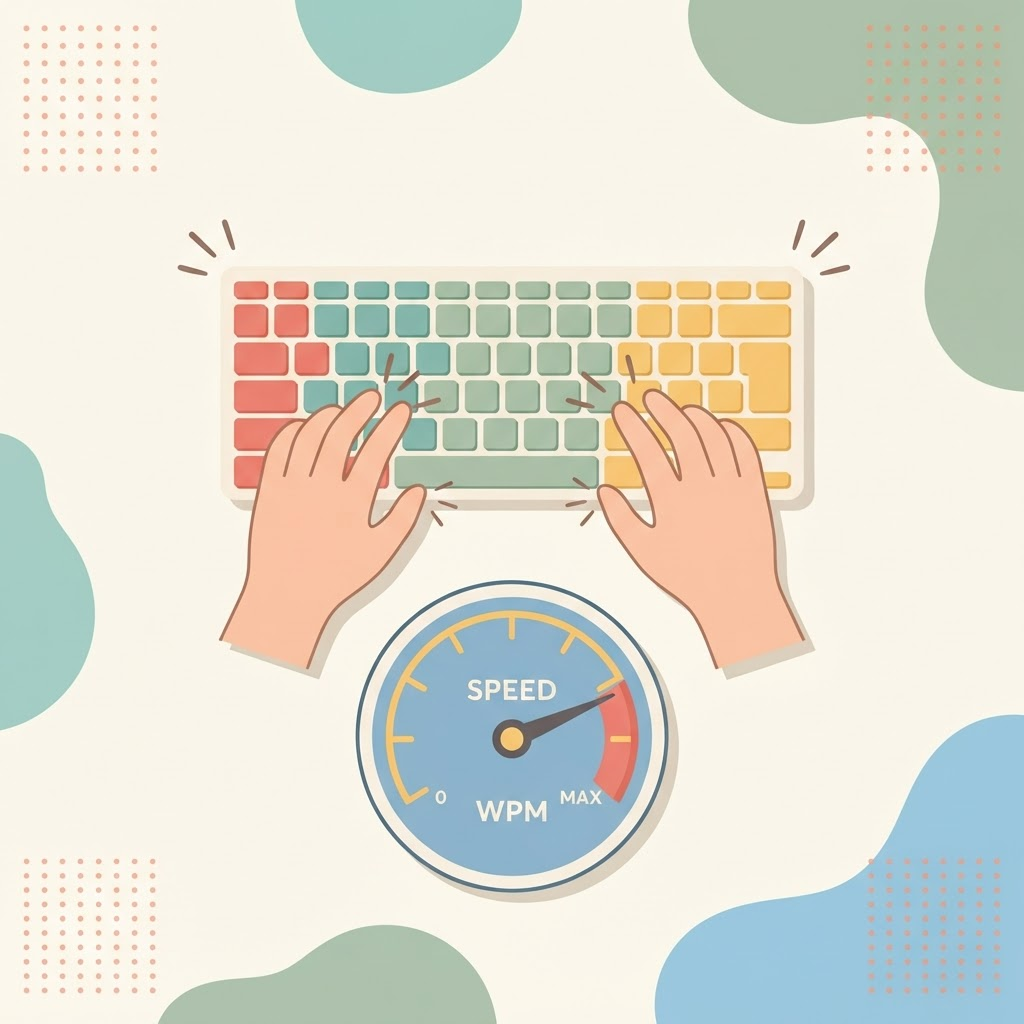
The single biggest predictor of whether you learn to type is whether you keep showing up — and nothing ends a daily habit faster than boredom. Typing games solve that by hiding repetition inside play, so you practise the same movements without it ever feeling like a chore.

Typing games are practice in disguise. Instead of drilling the same keys in a plain exercise, you type to score points, beat a clock or survive a round — and your fingers get the exact same repetition, just wrapped in something fun. Play free on the English typing games page, and use this guide to get real skill out of the play.
Why games actually build typing speed
It sounds too easy, but there is a real mechanism behind it. When you play a game, your attention is on the game, not on your hands. That does two useful things:
- Your fingers relax. Self-conscious, careful typing is tense typing. When a game distracts you, your natural, looser speed comes out — often faster than when you are trying hard.
- You stop looking down. Games move too quickly to check the keyboard, which forces the eyes-up habit that touch typing depends on.
- You practise longer. Because it is enjoyable, you play another round — and volume of clean repetition is exactly what turns into speed.
How to get real practice out of a game
- Warm up first. Start with a home-row lesson so you play with correct hand position rather than reinforcing sloppy habits.
- Keep your fingers on home. Even mid-game, return to A S D F and J K L ; between words. Speed with good form beats a high score with bad form.
- Don't abandon accuracy. A game that rewards wild guessing is not helping. Favour games that penalise mistakes, and keep your accuracy honest.
- Use games as a finisher. End a practice session on a game so you stop on a high note and want to come back tomorrow.
Where games fit in a daily routine
Games are a part of a balanced routine, not the whole of it. A pattern that works well is a short lesson to warm up, focused practice on real text, a quick typing test once or twice a week, and a game to finish. The lessons and practice build the skill; the game makes sure you come back to build it again tomorrow. The full routine is laid out in our complete guide to English typing practice.
Frequently asked questions
Can I really improve my typing just by playing games?
Games are excellent for building speed and keeping the habit alive, but they work best alongside structured lessons. Lessons teach correct technique; games give you the volume of practice that turns technique into speed.
Are typing games good for kids?
Very. For children especially, the game framing is often the difference between practising and giving up. Just make sure they start with proper hand position so they build good habits from the start.
Should I worry about accuracy while playing?
Yes — keep it honest. Prefer games that make mistakes cost something, so you are reinforcing clean typing rather than frantic guessing.
How much of my practice should be games?
Roughly a quarter is a good balance: most of your time on lessons and practice, with games as a warm-down and motivator. Adjust to whatever keeps you coming back daily.
Play a round now
If a plain drill is starting to feel like a slog, that is exactly when to switch to a game. Open the English typing games, warm up with a quick lesson first, and let the fun do the work of keeping you practising.